BOPP: The workhorse for high-volume printed food packaging
Food manufacturers have an incredible number of packaging options for their products. Helping them sift through those choices to find a material that extends shelf life and is appealing to buyers can help distributors build long-term relationships with their food clients. But to do this effectively, distributors need to understand the pros and cons of each material.
BOPP (Biaxially Oriented Polypropylene) is a very popular choice for food packaging. Recent reports estimate that up to 63% of all food packaging is made of BOPP. But BOPP is not just one material; it has hundreds of variations to address specific applications.
Imagine this: A customer calls and asks why their snack bags are delaminating at the sealer. Knowing the BOPP specs they should have been using is the difference between a quick fix and a lost account.
Why do food manufacturers choose BOPP?
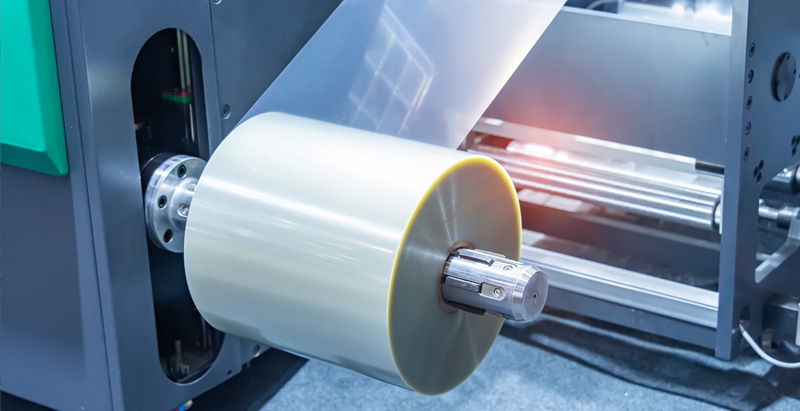
BOPP is manufactured by melting raw thermoplastic material, cooling it into a film, and then stretching it in two directions (lengthwise and crosswise). This biaxial stretching produces a thinner, stronger film with exceptional clarity, unlike other materials. This process gives BOPP the qualities that make it appealing for food packaging:
- Great sealability: Heat-sealing ensures tamper-proof, secure closures critical for single-serve snacks and pouches. BOPP films seal better than competing films at a lower cost when used on form-fill-seal machines.
- Excellent print quality: Available in gloss or matte finish; one of the best surfaces for flexographic printing with exceptional color vibrancy. Accepts both water- and solvent-based inks, offering more label effect options.
- Clarity: High clarity and gloss enhance shelf appeal; clear windows allow consumers to see the product, building trust.
- Extended shelf life: Protection against moisture and oxygen reduces food waste. A high moisture barrier keeps snacks, dry foods, and bakery items fresh. It can withstand wide temperature fluctuations.
- Durable and tear-resistant: Protects food during handling, transportation, and storage—good stiffness for high-speed packaging line machinability. Acid-resistance is suitable for tomato-based products, coffee, condiments, and citrus without label or packaging degradation.
- Cost-effective: Economical compared to alternatives like PET, while delivering comparable durability and moisture resistance. BOPP’s light weight reduces shipping and handling costs.
- Energy-efficient production: Less energy is required to manufacture BOPP than many other plastic materials.
- Food compliance: FDA-compliant for food contact (21 CFR Parts 174–178). Also meets EU food safety standards.
Applications in the food industry
The two main applications for BOPP are food containers, such as pouches or bags, and labels or printable overwrap. BOPP is ideal for snacks, bakery, dry foods, and retail-ready packaging.
- Snack foods: Keeps items like chips, pretzels, wafers, cookies, and chocolates crispy and fresh with superior barrier properties, while providing high-quality surfaces for strong branding.
- Bakery items: Maintains the texture and flavor of bread, buns, pastries, and cookies through moisture resistance and high clarity.
- Confections: Protects candies and chocolates from humidity and heat, providing an attractive, visually appealing finish.
- Dry groceries: Used for packaging nuts, rice, and pasta.
- Frozen foods: Prevents freezer burn and maintains quality for frozen meals, vegetables, and desserts; specific grades are stable at low temperatures.
- Fresh produce: Micro-perforated BOPP prevents ‘sweating’ and condensation, keeping vegetables fresh.
- Spices and powders: Ensures stable sealing to prevent leaks and spills
Specialized and advanced applications include:
- Form, Fill, and Seal (FFS) Applications: Utilized in automated processes where rolls of BOPP film are rapidly converted into bags, filled with products (such as snack bags, coffee pouches, pet food, and condiment packets), and sealed. Also common in the pharmaceutical and retail sectors.
- Laminated packaging: Combined with other materials to create specialized solutions, such as enhancing barrier properties or achieving unique textures.
- Metalized BOPP: Offers significantly improved oxygen and moisture barrier performance compared to clear versions.
Limitations of BOPP
Historically, BOPP, along with other forms of polypropylene, has not been easy to recycle. Many curbside recycling centers do not accept BOPP. Some recyclers do accept BOPP industrial waste, but not from the public, as it is often stained with food scraps or grease. Many recycling centers have enhanced their BOPP recycling capabilities in recent years, driven by emerging recycling techniques such as solvent-based recycling and pyrolysis.
Emerging materials such as BOPE (Biaxially Oriented Polyethylene) and recyclable-grade BOPP could become more relevant over the next few years. However, the vast majority of BOPP products still end up in the landfill.
Answering customer questions
Here are some questions that food manufacturers commonly have about BOPP, as well as some answers to help you provide the guidance they need in selecting appropriate food packaging:
Is BOPP FDA-approved?
Yes, like other forms of polypropylene, BOPP is approved by the FDA for direct food contact. One important caveat is that BOPP, like other food-safe materials, must meet specific manufacturing standards. Choosing a supplier with an SQF certification helps ensure that the packaging materials your customer needs are well and truly FDA-compliant.
Learn more: Flexible Packaging Films for Food: Managing Food Regulations and FDA Compliance
Which type of BOPP is right for my product?
BOPP is unique in that it can be formulated to meet specific applications. However, in general, there are several categories of BOPP packaging to consider:
- Clear: Used for high-visibility applications, such as packaging fresh salads or fruits to highlight their freshness and appeal.
- White: Ideal for light-sensitive products like dairy, protecting them while maintaining a clean look.
- Squeezable: Perfect for sauces or dips, allowing easy dispensing while keeping the product sealed and fresh.
- Metalized: Dramatically improved oxygen and moisture barrier versus clear versions, plus strong shelf presence with matte, gloss, or metallic finish options.
When would I want to use BOPP over PE or other materials?
Numerous factors go into weighing the advantages and limitations of each packaging material. To get a high-level overview, read more in our recent article: A Distributor’s Guide to Printable Food Packaging Film
Is it recyclable?
While recyclability is improving for BOPP, if sustainability is a core goal for your company, BOPP may not be the best choice.
Can I print on it?
While not inherently well-suited for printing, when treated, BOPP is renowned for its high surface tension, which allows for fast drying and sharp graphics in food packaging. Also, BOPP provides a superior surface for flexographic printing, yielding exceptional color vibrancy, and comes in gloss or matte. Compatible with both water-based and solvent-based inks for diverse label effects.
Is BOPP right for my customer?
There is no easy answer to this question. BOPP is a versatile and durable material, well-suited for numerous applications in the food industry. However, there are many factors to weigh, including sustainability versus durability. Each customer has their own priorities and brand reputation to keep in mind.
Adherex Packaging has many years of experience advising and supplying distributors for the food industry. We are SQF-certified, meaning we follow rigorous guidelines to ensure FDA compliance and quality for all our products.
Need help specifying BOPP for a food customer? Contact our team.