Printing on polyolefin film is common in modern packaging. PO films are flexible, non-porous, and designed to stretch or shrink, which can create unique challenges for ink adhesion, registration, and graphic placement. When handled correctly, however, printed PO film delivers clean graphics, strong durability, and excellent performance across retail and industrial applications.
This guide explains how POF film behaves, why printing requires specialized expertise, and what buyers should consider to avoid costly design or production issues.
What is polyolefin film?
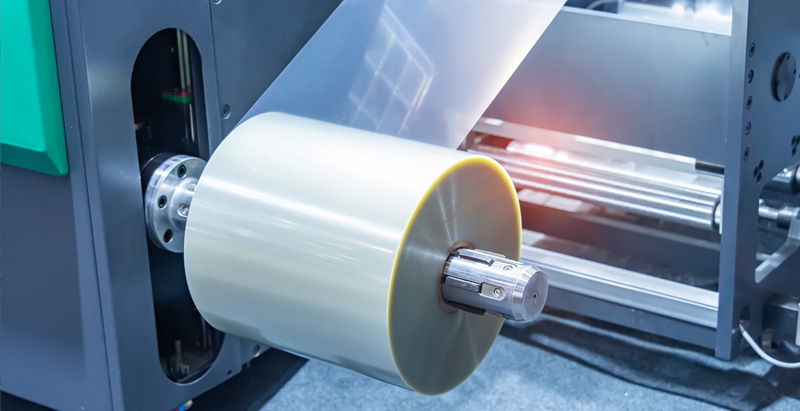
Polyolefin film refers to a family of plastic films typically made from polyethylene, polypropylene, or blended resins. Many formulations are designed to shrink uniformly when heat is applied, which allows the film to conform tightly to products.
PO film is widely used for shrink packaging, tamper-evident seals, and retail multipacks. It is valued for its flexibility, puncture resistance, and food-contact safety. Compared to stiffer films, PO materials handle irregular shapes more easily and maintain clarity after shrinking.
Why printing on PO film is challenging
Printing on PO film is difficult because the material is non-porous and highly flexible. Unlike paper or rigid plastics, PO film does not naturally absorb ink. Without proper surface treatment, ink can smear, scratch off, or fade during handling.
Film movement adds another layer of difficulty. Stretch films can elongate significantly during application, while shrink films reduce in size when exposed to heat. Both behaviors can distort text, logos, and images if the artwork is not adjusted in advance.
Because of this, printing on PO film is less forgiving than printing on paperboard or non-shrink plastics. Success depends on matching the right printing method, ink system, and design strategy to the film’s behavior in real-world use. Partnering with an experienced converter will help you achieve the best results.
Recommended use cases for printed PO film
Printed polyolefin film is used across packaging formats where flexibility, clarity, and durability are critical.
- Shrink films for retail multipacks
Common in beverage bundles, household goods, and consumer products, where the film must conform tightly and maintain graphic clarity after shrinking. - Tamper-evident wraps and seals
Used to clearly show interference while still allowing branding, instructions, or regulatory information to remain legible. - Retail overwraps and display packaging
Protects grouped products while maintaining visibility and a clean, professional appearance on store shelves. - Promotional and seasonal packaging
Allows high-impact graphics on short-run or campaign-based packaging that still requires strong shrink performance.
Advantages of printing on polyolefin film
Common benefits include:
- Highly transparent with a soft, clean appearance
- Flexible and puncture-resistant around irregular shapes
- Shrinks uniformly for a tight, professional finish
- Safe for many food-contact applications
- Performs well in multipack and tamper-evident uses
- Maintains clarity after shrinking
Printing methods that work best on PO film
Flexographic printing is the most common method for printing on PO film. Flexo is well-suited for long runs, repeat patterns, and bold graphics. It also supports high production speeds, which makes it cost-effective for packaging films.
Gravure printing is another option for very high-volume applications that require consistent image quality. It offers excellent control but comes with higher setup costs.
Digital printing may be used for short runs or variable data, but it is less common for large-scale PO film production due to durability and cost considerations.
Regardless of method, experience with film printing is critical. Printing on flexible substrates requires tighter process control than rigid materials.
See also: Offering Speed, Versatility, and Quality with Flexographic Printing
Ink adhesion, graphics design, and durability on PO film
Printing on PO film requires close coordination between surface preparation, ink selection, and graphic design. The material’s slick, non-porous surface has low surface energy, so surface treatment is essential for ink adhesion. Corona treatment is most common, with flame or plasma treatment used in some applications.
As for inks, there are two primary ink systems. Solvent-based inks are widely used because they provide strong adhesion, fast drying, and good scuff resistance, even during heat shrinkage. Water-based inks offer environmental benefits but rely heavily on effective surface treatment, while UV-curable inks are typically reserved for specialty or short-run work.
Film movement and durability must also be considered. Stretch films elongate during application, while shrink films reduce in size when heated; both can distort text and logos if the artwork is not adjusted in advance. Bold fonts, high-contrast colors, and simplified graphics perform best, with critical branding placed away from edges where distortion is greatest. Registration can be more difficult on flexible films, especially for multi-color designs. Thicker gauges, multi-layer constructions, and protective coatings or overprint varnishes will improve consistency and resistance to abrasion, moisture, and fading.
See also: SQF-Certified Packaging You Can Trust
Why experience matters when printing on PO film
Printing on polyolefin film requires more than standard press capability. It demands an understanding of film behavior, ink chemistry, surface treatment, and real-world application conditions. Experienced converters can simulate stretch or shrink effects, adjust artwork before printing, and recommend the appropriate materials.
Minor design changes made early can prevent major issues after packaging is applied.
Partnering with Adherex for printed PO film solutions
At Adherex, we understand the nuances of printing on polyolefin film. Through our flexographic printing capabilities, we help customers select the right films, inks, and design strategies for their specific applications. Our team works closely with customers to account for shrink behavior, durability requirements, and branding goals from the start.
Ready to explore what printed PO film can do for your next packaging project? Contact one of our material specialists today to get started.