Stretch film has been a staple of palletizing in the packaging world since the early 70s. Numerous shippers have used stretch film to secure and protect loads from damage, moisture, and dirt, both in transit and in warehouse settings.
But many organizations have been using the same conventional stretch film for decades without considering whether their efforts might be better served by switching to pre-stretched film, film mechanically pulled close to its breaking point during manufacturing. Pre-stretched film offers many compelling benefits, including potential cost savings, enhanced worker safety, better load containment, and sustainability features. However, it is essential to understand the strengths and limitations of pre-stretch vs. conventional stretch film to make the right choice for your operations.
Also read: Engineered Stretch Film: High-Performance Versus Off-the-Shelf Films
Pre-stretch vs stretch film: Key differences
As the name suggests, stretch film is made to stretch; in most cases, between 200% and 300%. However, in most hand-film applications, individual workers find it difficult to pull a film to 200% capacity. It takes a lot of effort, and there still may be a fair amount of elasticity left in the film, which can cause problems during transit.
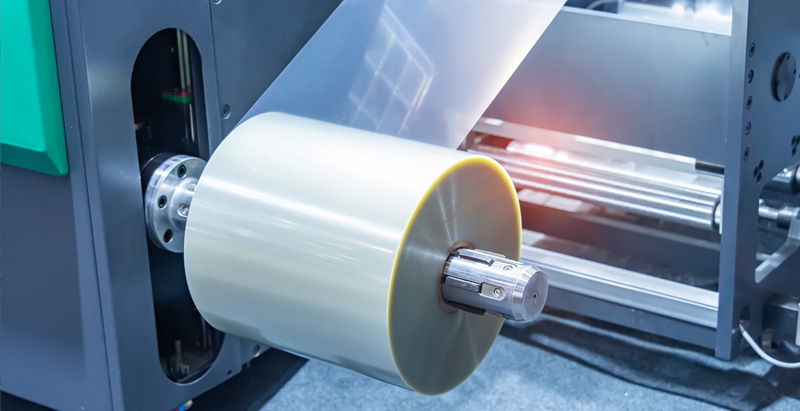
In contrast, pre-stretched film is pulled to its capacity before winding onto its final core. This process makes it much easier to apply. Workers can simply walk around a pallet to wrap it, rather than walking backward and stretching the film, as required with conventional film.
Pre-stretch film has built-in memory and begins to shrink when applied to a pallet or bundle, exerting more force than traditional film to secure the load. With less elasticity left in the film, it will not give as much during transit.
| Dimension | Conventional Film | Prestretched Film |
| Film Cost Per Pallet Baseline | Baseline | 25–40% lower |
| Film Usage Per Pallet | 100% (full roll weight) | ~50% less material |
| Operator Effort | High—must achieve 150%+ stretch | Low—film pre-optimized at the factory |
| Wrapping Consistency | Variable—depends on operator | Consistent across all operators |
| Roll Durability | Edge damage common | Very strong with reinforced edges |
| Injury/Ergonomic Risk | Moderate to high | Significantly reduced |
| Sustainability Profile | Higher plastic per pallet | 50% less plastic; recyclable options |
Pre-stretched film key benefits and features
Pre-stretched film provides benefits across three key categories:
Economics
25–40% pre-stretched film cost Savings vs. conventional stretch film.
Prestretched film arrives already at its optimal yield point. That means every inch of film delivers maximum hold—no operator variability, no wasted potential. The math is simple: 50% less film per pallet, translating to 25–40% lower per-pallet packaging cost. Rolls weigh less, so freight savings accumulate.
Worker safety
Study: Pre-stretch ranked #1 on every efficiency measure, including cost-per-Newton of stabilizing force.
Pre-stretch film requires a fraction of the pulling force of conventional film, reducing the risk of repetitive-strain injuries at the wrist, shoulder, and back. Pre-stretched film is easier to train new hires on, faster to apply, and produces consistent results regardless of operator experience. These results are good for your workers, your HR department, and your OSHA recordable rate.
Sustainability
A ~50% reduction in film usage means less material is used.
The simplest sustainability upgrade in the warehouse is using less plastic, and prestretched film does exactly that. Roughly half the material has the same or better load containment. For companies building ESG reports or meeting customer sustainability scorecards, switching to prestretched film is a fast, credible, and measurable win.
Also read: 7 Strategies for Reducing Stretch Film Usage
Key features
- Reinforced edges to prevent tears during application and shipping.
- Available in all eight color options.
- Core sizes include one-inch and three-inch.
- “Soft rolls” ensure the entire roll is used.
- Select sizes come in regular or extra strength.
- Custom sizes and specifications can be provided upon request.
When to use pre-stretch film
Consider how these benefits play out in a real-world scenario: Two pallets, one wrapped with conventional stretch film and one wrapped with pre-stretch film. Both are loaded onto separate trucks. However, both trucks take the same route, one filled with the usual transit hazards, such as potholes and sudden stops.
The conventional pallet of stretch film still retains significant elasticity after application. Each bump and swerve pulls at the film a bit more, increasing the likelihood of damage to the pallet.
The pre-stretched film pallet has already been elongated to its optimal hold. This fact means that with each pothole or stop, the film retains its hold on the pallet, keeping packages more firmly secured.
Pre-stretch film is an ideal solution in many situations. However, there are some drawbacks that end-users (and distributors) need to be aware of.
When to use:
- Lower volume, hand wrapping operations.
- Seeking to prioritize sustainability goals.
- Need to reduce worker strain and enhance safety.
When not to use:
- High volume or machine-wrapping operations.
- Uneven loads or bundles with sharp corners.
- Other specialty requirements needed, such as UV resistance.
Determining the best film for your application
A clear understanding of the key characteristics, the strengths, and weaknesses of each film leads to improved efficiency, sustainability, and cost savings throughout packaging workflows. Stretch vs pre-stretch, cast vs blown, specialty–there are numerous types of film to consider. Our packaging specialists can help you weigh the pros and cons of each to ensure the right fit for your application.
Get in touch with one of our experts to discuss which film is best for your unique needs.